This spring, several outstanding West Point cadets have earned some of the most competitive academic honors, reflecting the Academy’s commitment to developing leaders of character prepared to serve the Army and the Nation. Cadets from the Classes of 2026 and 2027 have been selected for prestigious opportunities, including the Knight-Hennessy Scholarship, Truman Scholarship, Hertz, and National Science Foundation Fellowship. Their achievements highlight academic excellence, leadership, service, and purpose cultivated at West Point and supported through programs such as the Brigadier General Peter M. Dawkins 1959 Scholars Program and Technical Scholars Program, made possible by private support. Seventeen cadets from the Class of 2026 will attend medical schools nationwide through West Point’s Pre-Medical School Scholarship Program.
Class of 2026 Cadets Selected for Knight Hennessy Scholarship
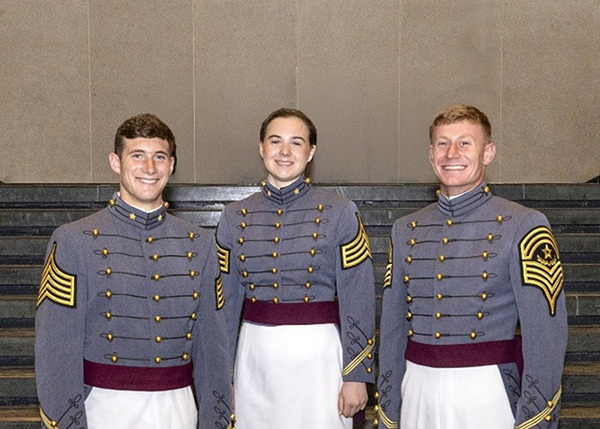
Stanford University recently announced that Cadets Sophie Campagna Fernandez ’26, Henry Kaye ’26 and Jack Maraziti ’26 have been selected as Knight-Hennessy Scholars, allowing for continued graduate study at Stanford University following graduation and commissioning on May 23.
About the Scholars
Sophie Fernandez, Class of 2026, is a native of Memphis, Tenn. She is a Russian major with a minor in Terrorism Studies. Her academic and professional experiences reflect a deep commitment to Eurasian regional security. She studied abroad at Al-Farabi Kazakh National University in Kazakhstan, completed language training in the Baltics, and worked with the Estonian Defence Academy. She also attended Georgia’s Sachkhere Mountain Warfare School. Beyond Europe, she worked with the 501st Military Intelligence Brigade in Korea. Stateside, she interned with the Defense Intelligence Agency and Joint Special Operations Command. In the Corps of Cadets, she served as a Battalion Executive Officer and worked alongside German liaisons to plan and execute two German Armed Forces Proficiency Badge events. Upon graduation, she will commission as a Military Intelligence Officer and aspires to use her language proficiency and regional expertise to support intelligence operations, strengthen strategic partnerships, and address emerging security challenges. Sophie will also attend Stanford University as a Knight-Hennessy Scholar to pursue a master’s degree in Russian, East European, and Eurasian Studies.
Henry Kaye, Class of 2026, was born and raised in Rockville, Md. He is a double major in International Affairs and Spanish. He is committed to representing and serving the United States in Latin America and across the world. During his time at West Point, he has traveled with the Army to Puerto Rico, Peru, El Salvador, Israel, Mexico, and completed a semester abroad at the Chilean Escuela Militar in Santiago, Chile. He has also completed Air Assault School and the Combat Diver Qualification Course. Within the Corps of Cadets, Henry served as the Cadet Field Training Regimental Commander, leading approximately 1,500 Cadets through summer Field Training. Henry currently serves as a Cadet Regimental Command Sergeant Major, implementing military discipline for over 1,000 Cadets. Henry will commission as an Infantry Officer and will pursue a master’s degree in Latin American Studies as a Knight-Hennessy Scholar at Stanford University.
Jack Maraziti, Class of 2026, hails from Sparta, NJ. He is a Mechanical Engineering major and a member of West Point’s Black and Gold Sandhurst Team. He has conducted multiple research projects focused on engineering and innovation, including research on the fluid dynamics of a nuclear inertial fusion system and the design of a field-expedient medical storage device. He has also completed two internships focused on advanced military technology. The first, at Picatinny Arsenal, focused on development of a speed loader for the Army’s new rifle, resulting in a provisional patent. The second, in collaboration with MIT Lincoln Labs, Special Operations Command, and partner forces, developed rapid-prototyping solutions for counter drone operations. In the Corps of Cadets, he served as a Battalion Commander, leading training and professional development for more than 300 other cadets. Upon graduation, Jack will commission as an Engineer Officer and will pursue a master’s degree in Mechanical Engineering at Stanford University as a Knight-Hennessy Scholar.
About the Knight Hennessy Scholarship
The Knight-Hennessy Scholars Program, the largest fully endowed scholarship program in the world, is designed to build a multidisciplinary community of Stanford graduate students dedicated to finding creative solutions to the world’s greatest challenges. The program annually identifies a group of up to 100 high-achieving students from around the world with demonstrated leadership and civic commitment. Learn more.
Class of 2027 Cadet Selected for Truman Scholarship
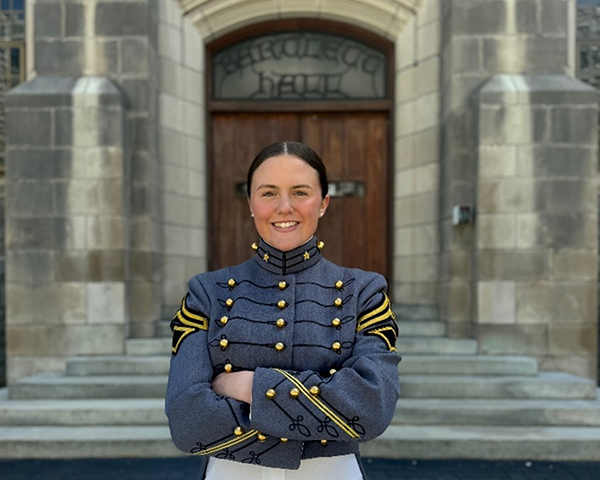
CDT Mary Claire Schleck ’27 was selected to receive the prestigious Harry S. Truman Scholarship for future leaders focused on studying for a career in public service.
“I am incredibly honored to have been selected as a Truman Scholar. This recognition is a testament to the mentorship, support, and opportunities I have received at West Point, from the Dawkins Scholars Program and the Department of Chemical & Biological Science & Engineering to my company, as well as the many mentors and peers who have supported me along the way,” Schleck said. “It is a privilege to be part of a community so deeply committed to service, and I hope to carry that commitment forward as an Army physician.”
About the Truman Scholarship
The Harry S. Truman Scholarship provides a $30,000 grant to support undergraduate academic endeavors and two years of graduate study leading to a master’s degree for candidates committed to public service in the United States. Truman Scholars are recognized for their exceptional leadership, dedication to careers in government or the nonprofit sector, and strong academic achievement. Learn more.
Class of 2026 Cadet Named Hertz Fellow
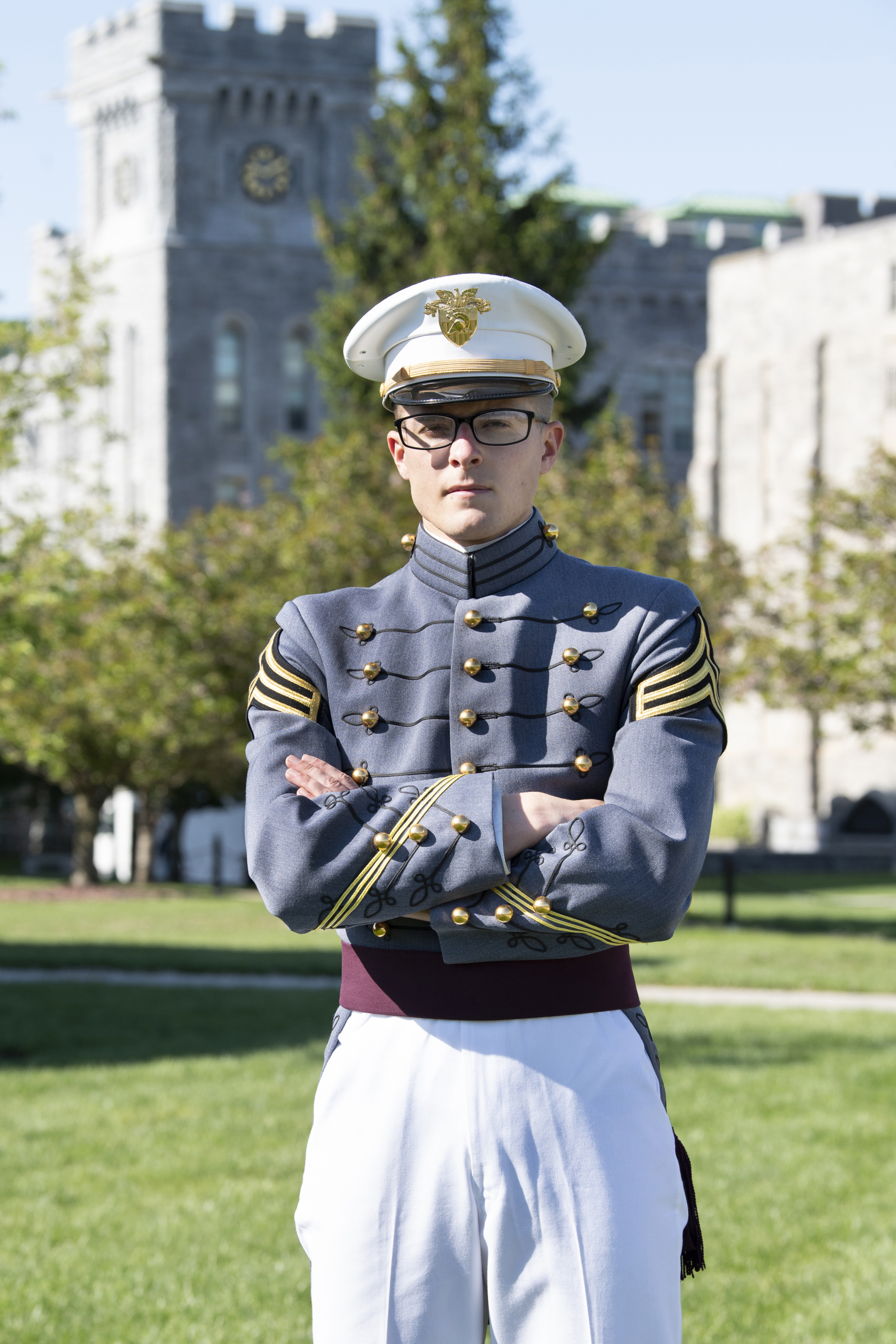
The Hertz Foundation recently announced that CDT Matthew Wanta ’25 has earned a Hertz Fellowship.
About the Scholar
Cadet Wanta is a mathematical sciences and computer science double major from Jackson, Wis. His work centers on machine learning for autonomous systems, integrating probabilistic modeling into cooperative drone search and swarm control frameworks. Wanta’s proudest research experiences include working with military organizations in developing information-theoretic drone path planning and mentoring a team of three junior cadets extending this work into new autonomy applications. As a cadet, he serves as company commander for the B2 Bulldogs and is a graduate of Sapper and Airborne School. Wanta will commission as a Cyber Officer and plans to pursue a doctoral degree at MIT’s Operations Research Center in collaboration with Lincoln Laboratory, where he will pursue research in support of military organizations and national defense.
“It is a tremendous honor and blessing to be selected as a Hertz Fellow and join a remarkable community of innovators and mentors. I am especially proud to represent Department of Mathematical Sciences, the Department of Electrical Engineering and Computer Science, West Point, and the Army as I further my education in support of national security. I am grateful to my instructors, mentors, research advisors, friends, family, and God for their steadfast support throughout my time as a cadet.”
About the Hertz Fellowship
Since 1963, the Hertz Foundation has awarded more than 1,300 doctoral fellowships with the goal of supporting the early-stage research endeavors of the nation’s most promising innovators in science and technology. Hertz Fellows receive funding for up to five years of graduate study, culminating in a PhD, to pursue research that best advances our nation’s security and leads to life-changing innovations. Hertz Fellows are selected from a broad applicant pool based on a written application, as well as two rigorous technical interviews. Learn more.
Class of 2026 Cadets Selected as National Science Foundation Fellows
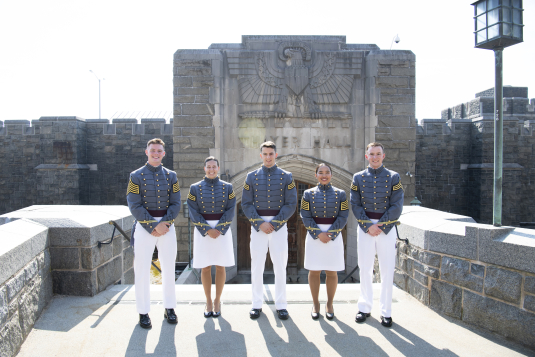
Cadets Logan Dosan, Kennedy Hecker, Babe Kwasniak, Christopher Tamer, and Gabrielle Wahjosoedibjo have been awarded the 2026 National Science Foundation Graduate Research Fellowship to pursue graduate research at leading institutions across the U.S.
The fellowship is a highly competitive scholarship, and these cadets will join a talented cohort of 2,500 scholars across the science, technology, engineering, and mathematics disciplines. Their selection reflects West Point’s continued commitment to academic excellence and its investment in developing future leaders in scientific innovation and research.
About the Fellows
Cadet Logan Dosan is an Engineering Management major with an Infrastructure Engineering sequence from Bloomington, Minn. His research focuses on a range of interdisciplinary topics including systems engineering, contested logistics and supply chains, distributed computing and communication systems, and operational systems analysis. Dosan serves as a Cadet Battalion Commander and leads West Point’s chapters of the Fellowship of Christian Athletes and the American Society for Engineering Management. He is also a member of the Army Division I Men’s Hockey Team. Following graduation, he will be commissioned as an Engineer Officer, will pursue an M.S. in the Technology and Policy Program through the Draper Scholars Program at MIT, and later plans to use the NSF GRFP to pursue a doctoral degree.
Cadet Kennedy Hecker is a Systems Engineering major from Lee’s Summit, Mo. Her research focuses on food supply chains, with particular emphasis on contested logistics and economic risk within critical supply networks. Hecker serves as the Women’s Team Captain for Army Crew. Upon graduation, she will be commissioned as an Army Military Intelligence Officer and will pursue a master’s degree in agriculture economics through the Purdue Military Research Institute Fellowship. She plans to use the NSF GRFP later in her career to complete a doctoral degree in Industrial Engineering.
Cadet Babe Kwasniak is an Applied Statistics and Data Science major from Chesterland, Ohio. His research this past year explored secure communications for FPV drone video systems. Kwasniak is also a member of the Strength and Conditioning Team assigned to the Men’s Lacrosse Team. Following graduation, he will be commissioned as an Infantry officer and will pursue an M.S. in Aeronautics and Astronautics through the Draper Scholars Program at MIT. He later plans to use the NSF GRFP to pursue a doctoral degree.
Cadet Christopher Tamer is a Mechanical Engineering major with a minor in aeronautical engineering from Dexter, Mich. His past research focused on a broad range of topics including experimental contaminant dispersion, battery energy storage, controllable liquid jets for Inertial Fusion Energy and the design and manufacturing of a rocket motor test stand. Outside the classroom, he serves as the Coach and Director of Hockey Operations for the Army Club Hockey team. Upon graduation, he will be commissioned as an Infantry officer and will attend Massachusetts Institute of Technology pursuing a master’s degree in Mechanical Engineering.
Cadet Gabrielle Wahjosoedibjo is an Electrical Engineering major with a concentration in optoelectronics from Katy, Texas. Her research focuses on fiber optic applications in electronic warfare systems and rare-earth doped materials for solid-state lasers. Last year, she earned the Stamps Scholarship, supporting her publication and presentation efforts in these research areas. At West Point, she serves as a Regimental Honor Captain, upholding ethical leadership and the Academy’s honor code for 1,200 other cadets. Beyond her military roles, Gabrielle is a soloist with the West Point Glee Club and has represented the Academy in musical performances around the United States and abroad. Upon graduation, she will be commissioned as an Engineer Officer and will attend Stanford University through the NSF GRFP to pursue an MS in Electrical Engineering.
About the National Science Foundation Graduate Fellowship
The National Science Foundation Graduate Fellowship is awarded each year to top students in science, technology, engineering, and mathematics to pursue graduate study at U.S. colleges and universities. The fellowship provides up to three years of funding, with the intent of supporting a doctoral degree. Fellows are selected by a panel of NSF reviewers who evaluate rigorous technical research proposals and personal statements. Fellows must demonstrate the potential to provide significant intellectual merit in their field of study, and to broadly impact society by contributing to the strength of the scientific workforce in the U.S.
Class of 2026 Future Army Doctors
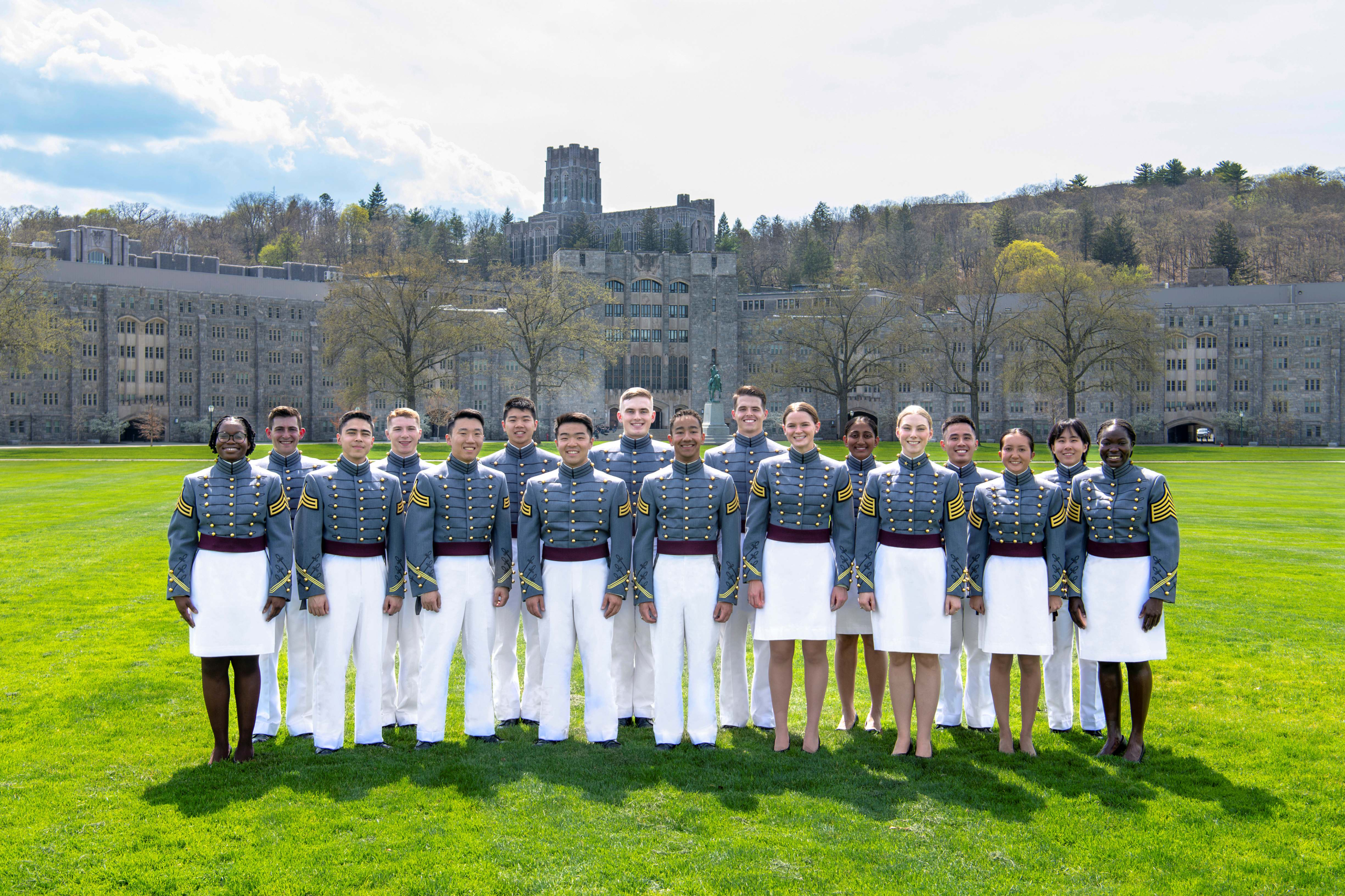
Seventeen cadets from the U.S. Military Academy’s Class of 2026 will attend medical schools nationwide through West Point’s Pre-Medical School Scholarship Program. Endorsed by the Academy’s Medical Program Advisory Committee, these cadets were selected for their exceptional dedication to research, clinical experience, and volunteer service.
Upon graduation from medical school, they will contribute to the readiness of our Nation’s Armed Forces as U.S. Army medical officers. Since 2018, West Point has commissioned 148 cadets to medical school, reflecting the Academy’s enduring commitment to developing the next generation of Army physician leaders.
“These cadets represent the very best of West Point’s commitment to leadership, scholarship, and selfless service,” said Dean of the U.S. Military Academy’s Academic Board Brig. Gen. Shane Reeves. “As Army physicians, they will stand on the front lines of readiness, bringing their discipline and intellectual agility to one of the Army’s most critical missions.”
The following West Point cadets have been chosen to attend various universities:
Bettina Yan, Texas A&M University
Walker Blackmon, Texas A&M University
Catherine Brodsky, Duke University
Donald Darrell, Uniformed Services University
Xinyi Feng, Rutgers University
Raul Godinez, Uniformed Services University
Hojin Han, Yale University
Sean Lai, Uniformed Services University
Similoluwa Olaniyi, Uniformed Services University
Emmaline Pendleton, Uniformed Services University
Aba Quainoo, Uniformed Services University
Matthew Rusch, Wake Forest University
Supria Shroff, Dartmouth University
Eric Song, Uniformed Services University
Joshua Soriano, Uniformed Services University
Cole Stone, Michigan State University
Sebastian Vasquez, Dartmouth University
About the West Point Pre-Medical School Scholarship Program
The Pre-Medical Scholarship Program prepares cadets for medical school and service as military physicians. Up to three percent of each graduating class may enter medical school directly from the United States Military Academy at West Point. For more information about West Point scholarship programs, go to www.westpoint.edu/academics/scholars-program
Photos: U.S. Army Photos by PAO/USMA