September marked 25 years since 9/11. The attacks that day affected the cadets, graduates, and leadership of the U.S. Military Academy (USMA) in ways no one could have predicted, searing memories into the Long Gray Line that, even a quarter-century later, refuse to fade.
Graduate Reflections: New York
John Mahony ’78 retired from the Army in 1999 as a lieutenant colonel. On 9/11, he was working with Empire Blue Cross on the 19th floor of the North Tower at the World Trade Center (WTC). Mahony was with his team when American Airlines Flight 11 flew into the floors above them. “As the building began to sway back and forth, rolling under my feet, I leaned against a partition and registered the loud boom of an explosion,” Mahony recalls.
“My West Point and military experience kicked in,” he continues. “I knew I had to take care of my team and make sure they made it through.” Mahony sent his teammates to the nearest stairwell, then headed to another stairwell to ensure everyone was evacuating. Once outside, stuck between the first responders’ emergency cordon and the tip of Battery Park, he couldn’t do anything but watch as the second plane hit the South Tower. Mahony ran as both towers crumbled, covering him in ash, particles, and dust. In the roughly 50 presentations he’s since given about his experience, he describes scenes like an ambulance mistaking a debris-choked walking path for a road and crashing down a flight of stairs and a biology teacher frantically asking dust-camouflaged survivors if they were students from her field trip.
Mahony was motivated during the disaster by the “You take care of your troops” principle. “When you help other people, you help yourself as well,” he says. “It gave me something to focus on at the time besides the building falling down around me, because I was worrying whether I could get these people out of danger and determining the best way to do that.”
Of all the businesses occupying the WTC on 9/11, the financial firm Cantor Fitzgerald suffered the largest corporate loss of life: 658 employees died in the attack. Doug Gurian ’86 had been a bond salesperson at Cantor Fitzgerald for a decade before leaving in early 2001 to work at Radianz, a financial services technology firm in Midtown. When his USMA roommate and best friend Scott Poirier ’86 learned of the attack, Poirier assumed the odds were in Gurian’s favor. “I wasn’t too worried because I knew he was no longer working at the towers, but I immediately called him anyway and couldn’t get through,” Poirier says.
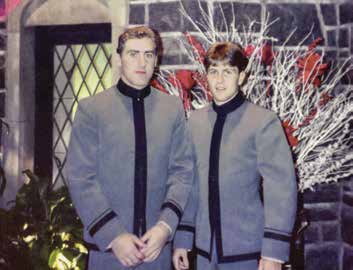
What Poirier didn’t know was that, on 9/11, Gurian was attending a conference at the WTC’s Windows on the World. He was the only West Point graduate killed in the attack on that day.
Gurian’s remains were found and positively identified relatively soon after the attack; family and friends spread his ashes on Fire Island, where Gurian and Poirier spent innumerable carefree summer days at the Gurian family beach house. Gurian’s name is etched in the 9/11 memorial at the WTC site, and a New York Waterways ferry was christened in his name.
Gurian’s death was a shock. “We had lost classmates to accidents, but losing Doug reinforced the fragility of life,” Poirier says. “Now that I’m in my 60s, that’s all obvious to me—but it wasn’t so back then.”
Kris Urbauer ’86 was in a civilian job with General Electric in a Chicago high-rise when news broke of the 9/11 attacks. Out of uniform since 1995, Urbauer says, “I desperately wanted to do something, and I also wanted to put my uniform back on.” Within two weeks, she got her wish.
After active duty, Urbauer was promoted to major while in graduate school and was a member of the Individual Ready Reserve. A call from the Pentagon in mid-September 2001 recalled her to duty, and Urbauer found herself at Ground Zero, attached to the U.S. Army Corps of Engineers, New York District.
“I sent daily reports to the Pentagon detailing the amount of debris removed from the site and the amount of material processed at the Staten Island Landfill, where most of the personal effects were sorted for evidence,” Urbauer says. “I also was responsible for in-processing and out-processing the civilian debris experts who worked for the Corps.” Urbauer also gave site tours to VIPs, both military and civilian, foreign and domestic. She served at Ground Zero for 365 days.
The site was an “absolute horror,” Urbauer recalls. “It was like a bathtub—that’s what we called it—a huge, empty space where the buildings had stood that was filled with burning rubble… and it burned for months.” Still, Urbauer couldn’t imagine being anywhere else. “I wanted to be a part of the effort to heal my country,” she says. “It was definitely my duty to be there.”
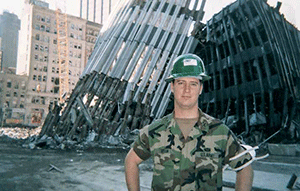
A program to get more active-duty officers to join the National Guard led Sean Mullin ’97 to transition to the 107th Corps Support Group of the New York Army National Guard in the summer of 1999. Mullin’s father called him on the morning of 9/11 with news of the attacks; from his apartment window at 90th and Columbus, the younger Mullin could see the smoke from the World Trade Center as it burned. He donned his Guard uniform, walked across town to his armory on the Upper East Side, and was the first officer to report.
“I’ll never forget walking across Central Park—in my uniform—as thousands of New Yorkers, some covered in dust and ash, flooded north towards the Bronx,” Mullin recalls. Working with the New York Police Department and the New York Fire Department to secure the area, Mullin’s tasks included escorting any found body parts to the medical tents set up around Ground Zero. In January 2002, he was promoted to captain and named officer in charge of the soldiers stationed at Ground Zero. Mullin served there until mid-August, also helping secure bridges and tunnels under the city’s jurisdiction.
“Looking back, I see that the true value of my service at Ground Zero was that I provided a sense of comfort to New Yorkers who felt better knowing that there were people in uniform during such uncertain times,” Mullin concludes. “From the perspective of the civilians in New York City, I now know that they were grateful for my service, however futile and insignificant I might’ve viewed it at the time.”
Graduate Reflections: Washington, DC
Charlie Rash ’73 was at the Pentagon on the morning of 9/11 when his wife called to break the news of the WTC attack. Rash, who retired as a colonel in 1999, was a director with SY Technology, managing a portfolio that supported the U.S. Army. He was in a reception area, looking out the large window on the Pentagon’s western side, where American Airlines Flight 77 would later hit. “A general came out of his office and asked if I knew that the World Trade Center had been attacked, and immediately after he spoke the plane hit the building,” Rash says.
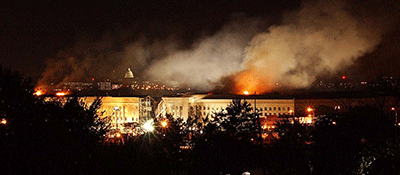
“I saw a large ball of fire fill up the sky outside the window and watched the window bulge in toward the room,” he continues. “Simultaneously I told my wife, who was still on the phone, that I had to go, and I dropped to the floor.” A moment later, Rash was back on his feet. The walls of the offices to his left had been pushed approximately five to six feet toward the center of the building, and black, oily smoke limited vision to about one foot. Despite the chaos, Rash and others in the vicinity managed to escape.
Rash says his perspective changed after 9/11: “I now looked at the situation we were in as a country and recognized that the battlefield had changed radically, where no one was safe any longer from attack.”
On the second floor of the Pentagon’s E Wing, then-Colonel Robert Caslen ’75 had watched in shock as the initial WTC attack was reported on a television in the offices of the Joint Chiefs of Staff, where Caslen was deputy director for strategy and policy. “I said the next target is a command-and-control facility, most likely in Washington,” recounts Caslen, who was USMA Superintendent from 2013 to 2018 and is now a retired Army lieutenant general. “Eleven minutes later, we were hit.”
The Pentagon, built of solid concrete, is so sturdy that Caslen and his colleagues didn’t feel or hear a thing; but as sprinklers gushed and sirens wailed, they were told to evacuate. Caslen recalls, “We got outside, saw the Pentagon burning, and I said, ‘There’s no way I’m going to spend the rest of the day outside here.’” He joined forces with a Marine colonel and a Navy captain and headed back in. “We were the Joint Staff, so we had the responsibility of tracking down the president and the chairman of the Joint Chiefs of Staff and establish communications,” Caslen explains. After being turned away twice by police, the trio was undeterred. “Finally, we went to a third place and snuck in,” he says. After locating and evacuating others, they reached the command center and re-established communications.
Matthew Klimow ’74 was also in the Pentagon on that day. As the executive assistant (EA) to General Richard B. Myers, the acting chairman of the Joint Chiefs of Staff, Klimow had a telephone to each ear when Flight 77 struck: one was the “Red Switch” secure line on a conference call with the White House and the commanding general of NORAD; on the other line was the chairman of the Joint Chiefs of Staff, who was out of the country at the time.
“I was relaying information to the chairman when the building shook and pandemonium broke outside my door in the corridors,” Klimow says. “The watch officer in the National Military Command Center [NMCC] broke into the Red Switch conference call and notified us that the Pentagon had been hit by an airplane.”
Myers rushed back from a Capitol Hill meeting, and he and Klimow went straight to the NMCC, where they were joined by Secretary of Defense Donald Rumsfeld to direct the military response to the attacks.
Less than three weeks later, Myers was sworn in as the 15th Chairman of the Joint Chiefs of Staff, with Klimow as his EA for the first year of the Global War on Terrorism. Klimow retired in 2003; he served as U.S. ambassador to Turkmenistan, bordering both Afghanistan and Iran, from 2019 to 2024. “The West Point ethic of Duty, Honor, Country has been my foundation in serving our nation for over 50 years as a soldier and as a diplomat,” Klimow says. “I have never lost sight of the key phrases in the West Point Cadet Prayer: ‘Encourage us in our endeavor to live above the common level of life,’ and ‘Make us to choose the harder right instead of the easier wrong.’”
Graduate Reflections: West Point
The 9/11 attacks were deeply personal for Major Ramona (Fastow) Jones ’05. A plebe at the time, she was about to enter her chemistry class in Bartlett Hall when someone said a plane had hit the WTC.
“I knew my dad was there: It’s where he worked as a contract law attorney for the Port Authority of New York and New Jersey,” Jones says. Fredric Fastow’s office was on the 66th floor of the North Tower, just below where the first plane hit. Numb and in shock at the news of the attack, Jones was encouraged by her instructor to return to her barracks. “I bumped into a firstie, and he took me to the chaplain’s office,” she says. “I was raised Jewish, and this chaplain was Christian, but it didn’t matter what religion we were—he prayed; I listened.”
A few days earlier, Jones’ parents had joined her for an Army Football game. After the game, they said their casual goodbyes. On 9/11, Jones feared it may have been her dad’s last farewell. The landline phone in her room, however, soon became her lifeline: At 2:30pm, it rang. Her dad was on the line, saying he was okay. He told his daughter he had convinced a coworker to walk the 66 flights of stairs down with him to safety, instead of the easier, quicker climb to the observatory level, where they would have hoped for rescue that would never arrive. “Amid all the horror and disbelief of the day, I could finally feel relief,” Jones says.
Two years after graduating and commissioning into the Adjutant General branch, Jones deployed for 15 months to the Afghanistan-Pakistan border. “The 173d was there for two fighting seasons,” she recalls. “We lost 45 members of one brigade over those 15 months.” Jones, now a major in the U.S. Army Reserve, recounted her military career as she sat in the West Point Starbucks, coincidentally 21 years to the day after graduating. A parking lot separates the coffeehouse from the West Point Cemetery. That wasn’t lost on Jones, who glanced pensively out the window: “I sit here, and across that parking lot there are classmates perpetually in their 20s, who never had a chance to live their lives. That’s a part of our class’s identity.
And that’s a direct result of 9/11.”
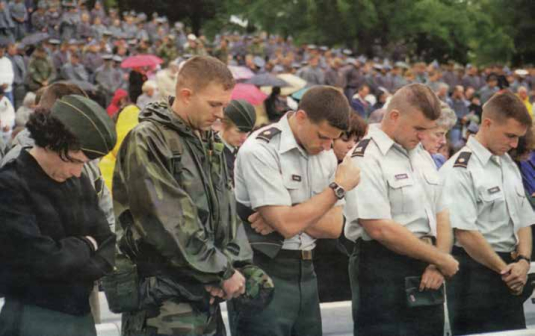
Three days after the attacks, cadets held a vigil on the Plain. Then-plebe Lori Imsdahl ’05 says she remembers the memorial service, but not her reaction to it. “Looking back, it’s easy to see that this was because I was 19 and naïve, and not from a military family,” she recounts. Imsdahl relayed the details of the vigil in her blog, Pivotal Places: “The Corps of Cadets, all 32 companies, stood in formation around the swath of manicured grass. The moon was huge, and the night was very cold, even in my long-sleeved, high-necked uniform.” The band played “Amazing Grace” and “Taps” on bagpipes, and a rifle volley followed to honor of the victims.
USMA leaders were in morning meetings when they learned of the WTC attack through television and other media. Upon hearing of the first plane hitting the North Tower, then-Commandant Major General Eric “Rick” Olson ’72 (Retired) recalls officers in the room saying, “What a horrible accident; how does that happen?” “Then we heard there was a second plane,” Olson says. “That’s when we knew it wasn’t just an accident.”
“We knew the world was going to change in ways we couldn’t immediately figure out,” says Brigadier General Daniel J. Kaufman ’68 (Retired), who was USMA’s Dean at the time. Leadership’s focus immediately became how to protect the cadets. “We thought we might be a target; not a strategic one, but an emotional one,” Kaufman says.
“People forget that, at that time, West Point was an open post,” says Lieutenant General William J. Lennox Jr. ’71 (Retired), then-Superintendent of the Academy. “We had two million visitors a year, and we were the third-largest tourist attraction in the state behind New York City and Niagara Falls.”
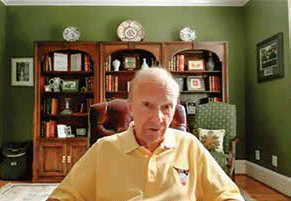
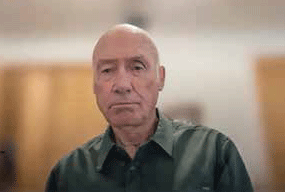
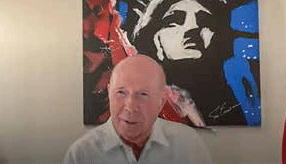
With feedback from the Pentagon, USMA’s leadership decided to close the Post, which is still not fully open a quarter of a century later, Kaufman notes. “Perhaps one of the most tragic outcomes of 9/11 for the Academy is that lingering sense of isolation from the American public,” he says.
As the days unfolded, some cadets were getting fractious. “I heard that there were probably about 100 cadets who wanted to leave immediately, to get involved in fighting the war,” Lennox remembers. “The first talk I gave to the Corps as a whole was from the Poop Deck at lunch two days later and told the cadets, ‘Your mission is to stay here, to be the future officers in the Army and to practice tactical patience, stay here at West Point and graduate.’”
Shock dissolved into resolve among USMA leadership, as the reality of an imminent war surfaced. “What occurred to me was that we were about to graduate a class of cadets who would go directly into combat: That’s the first time that happened since the late 1960s, when we were graduating classes to go straight to Vietnam,” Olson says. “The question became what do we do to get cadets ready to go directly into war, a war we really didn’t understand at that point, and arguably never understood.”
As the Global War on Terrorism began, some instructors left USMA to fight. “The Army was under a lot of pressure to come up with brigades, and they started sending our instructors to units to deploy,” Lennox recalls.
Through all of that, the Academy strove to continue training its cadets. “We’d have parades, but we’d have snipers on the roof keeping an eye on what was going on,” Lennox says. “Eventually, we raised the curb height so trucks couldn’t go out onto the parade field.”
Being Superintendent was sobering as the post-9/11 years brought tragic news again and again. “I thought, when I came in as Supe, that the toughest part would be separating a cadet from the Corps or something like that,” Lennox says. “But going to the funerals of cadets you knew…that was really tough.”
Graduate Reflections: During Training
Phil Kreck ’01 was a freshly minted second lieutenant taking part in the Infantry Basic Officer Leader Course at Fort Benning, Georgia on 9/11 when the staff stopped a live-fire exercise and collected all the lieutenants in a small group. “The instructors asked if we had any relatives who worked at the Pentagon or the World Trade Center,” Kreck recalls. A former Special Forces communications sergeant worked some magic on their military radio, and through poor reception the group learned of the attacks.
The rookie officers gained a new sense of purpose. “Prior to 9/11, the United States was enjoying a certain degree of peace-time calm,” Kreck says, “but 9/11 painted a new picture of the world for us new lieutenants.”
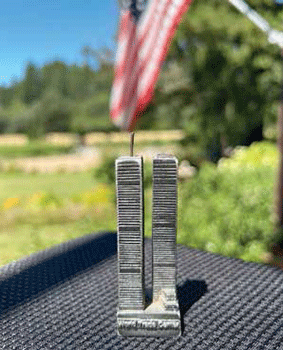
Kreck later flew up to New York City to see the aftermath. “On a whim, I purchased a small pewter statue of the World Trade Center,” he says, and he later attended Ranger School with 9/11 fresh in his mind and the 2-inch statue in his pocket. Personal trinkets were verboten when Kreck was in Ranger School in the winter of 2001-02. “A ranger instructor ‘caught’ me with it during an inspection, and he started to raise his voice—until he recognized it,” Kreck says. “He paused and handed it back to me, saying, ‘I’ll allow it.’” The statue traveled with Kreck through his active and Reserve service, including overseas. “It was a small but persistent reminder of just one reason for our service,” Kreck says.
In September 2001, then-Brigadier General Guy Swan ’76 was based in Grafenwöhr, Germany as a commanding general in the 7th Army Training Command. But on September 10, Swan was in Montgomery, Alabama for a week-long course at the Air War College, a school for generals and admirals. The keynote speaker, a retired Marine four-star general, unwittingly gave a chilling foreshadow of what was to come. “Our discussion got into terrorism,” remembers Swan, now a retired lieutenant general. “We were talking about vulnerability and attacks when the Marine general said, ‘It’s not a matter of if; it’s a matter of when.’” The next morning was 9/11.
The course was terminated, and with flights grounded for the next few days, Swan could not immediately return to his base. He remembered that people kept asking him and his fellow West Point graduates what the attacks meant. “Whether we are still serving, or in a civilian career, West Point graduates are looked to for answers when the nation is in crisis,” he says. “I think that’s the reach that West Point graduates have—we are the expert in the public’s eyes.”
Amid the loss and tragedy, West Point created solutions. “The events of 9/11 demonstrated a change in the character of warfare, and West Point had to stay ahead of those changes,” Swan says. “The West Point Werx Innovation Hub is one of many examples of how the Academy is preparing the next generation of U.S. Army officers to lead in times of rapid change.”
Other programs begun at West Point after 9/11 are succeeding decades later. The Combating Terrorism Center—founded in February 2003 by General Wayne A. Downing ’62 (U.S. Army, Retired); Vinnie Viola ’77; and Brigadier General Russell Howard (U.S. Army, Retired)—has become an indispensable source of knowledge on terrorism worldwide.
“Every aspect of the cadet experience—the curriculum, the professional military development under the Commandant, and the leadership of the institution from the Superintendent’s Office—moved us forward in strategic ways that are still paying dividends because of the content and the quality of the programs that continue to contribute to education in the broadest sense,” Kaufman says. “As I look back on it, 9/11 helped kickstart that transformation.”
The events of 9/11 birthed the “GWOT generation”: the post-9/11 West Point graduates who fought in the Global War on Terrorism. As reported in the 2021 Spring issue of West Point magazine, 12,600 graduates from the classes of 2000 to 2015 were deployed during their first five years of service. Of those officers, 3,572 received the Combat Infantryman Badge, the Combat Action Badge, or the Combat Medical Badge. An additional 871 medals (i.e., Silver Stars, Bronze Star Medals with “V” device, Purple Hearts, and Army Commendation Medals with “V” device) were received for exceptional and heroic service under fire. Lennox’s Poop Deck advice about tactical patience paid off, as those graduates served multiple tours in Iraq and Afghanistan and, in Lennox’s words, “really did an outstanding job.” Etched into the memory of those years are also the 101 men and four women of the Long Gray Line who lost their lives as a result of the attack or have given their lives in the defense of freedom while fighting GWOT. Surely these soldiers who were called upon to offer and give their lives for their country are, as General Douglas MacArthur, Class of 1903, once attested, “the noblest development of mankind.”
This article was originally published in the Fall 2026 edition of West Point magazine. View the archive of past issues here.