
The “D-Day” Class
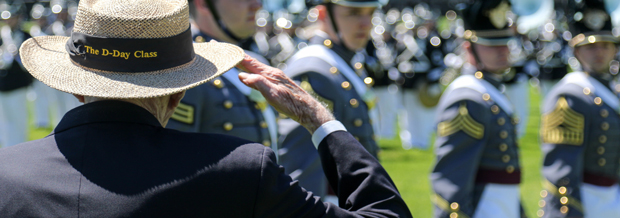
Most of the Class of 1944 entered the United States Military Academy on July 1, 1941, at the outset of World War II, and 474 graduates marched across the stage on June 6, 1944. This class, which came to be known as the “D-Day” class, graduated in just three years to serve their country in the global conflict. Their graduation day coincided with the historic D-Day landings in Normandy, led by GEN Dwight D. Eisenhower (1915), while his son, future Ambassador John Sheldon D. Eisenhower, walked across the stage as a newly commissioned officer. The graduation ceremony was marked by an inspiring speech from LTG Brehon Somervell (1914), commanding general of the Army Service Forces during WWII, who reminded the class that their service would be marked by the “grim, tough, and bloody march” to defeat Germany and Japan.
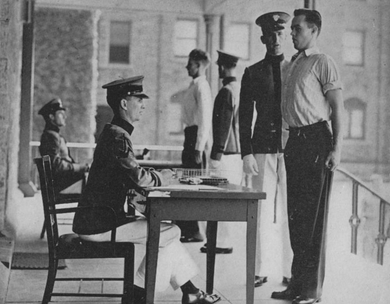
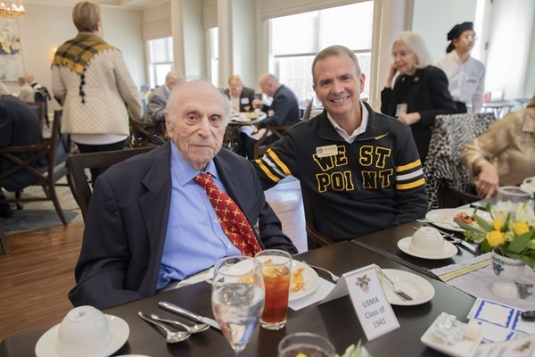
The Cadet First Captain for the Class of 1944 was John Cushman, and the first in the class to join combat was Thomas Lawrence. The last living graduate of the class was Noel D. Austin, who reached 103 years of age before his passing in 2025.
Training, Traditions, and Challenges:
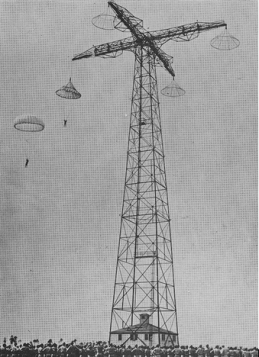
The global conflict shaped the training and traditions for the Class of 1944. Their military training intensified after the attack on Pearl Harbor, and their academic studies were accelerated to prepare them for the challenges ahead. They were the first class to undergo summer field training at Camp Popolopen and received specialized armor training at Pine Camp.
The class faced unique challenges due to wartime conditions. The football team, for example, had a record of 7-2-1, with Army losing to Navy all three years during their time at the Academy. The 1943 Army-Navy game saw half the Corps cheering for Navy, as wartime travel restrictions prevented midshipmen from attending.
Notable Graduates and Military Accomplishments:
The Class of 1944 produced a remarkable array of military leaders and heroes, with 38 members attaining general officer rank, including two four-star generals: GEN George S. Blanchard and GEN John J. Hennessey. Over 60% stayed on active duty for at least 20 years. Additionally, the class was known for its heroic contributions during the war, with 29 members awarded the Distinguished Service Cross, including Edward C. Christl Jr., co-captain of the 1944 undefeated 15-0 Army basketball team, for whom Christl Arena is named. Ninety-six earned the Distinguished Flying Cross, and many others received Silver Stars, Bronze Stars, and other medals for valor.
The class faced the horrors of war head-on, with 12 members losing their lives in action during WWII and the Korean Conflict. Notably, 24 members were taken as prisoners of war during WWII and the Korean Conflict, with some, like Robert Wessels and James Giles, managing to escape. Several others, such as William Tuttle, served heroically in combat, earning recognition for their bravery in the European Theater.
Giving Back to West Point:
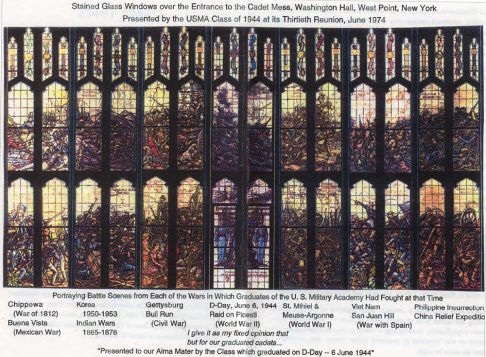
The Class of 1944 maintained a strong connection to their alma mater, contributing generously to the Academy over the years. They donated over $500K to West Point, funding numerous initiatives, including the construction of the stained-glass windows over the main entrance to Washington Hall. In the truest spirit of gripping hands, the class of 1994 agreed to act as the agent of the Class of 1944 when the time comes for restoration or maintenance of these windows. 1944 also contributed significantly to the endowment of the library and the West Point Preparatory School Program Scholarships.
In addition to financial contributions, the class remained deeply engaged with West Point and each other. Several members returned to teach and lead at the Academy, including three department heads and a dean: Jack M. Pollin (Mathematics), Donald G. Macwilliams (Chemistry), and Frederick A. Smith (Mechanics), who also served as Dean of the Academy.
The Class of 1944’s legacy lives on through their descendants. As of 2025, more than 56 graduates are descended from 35 members of the “D-Day” class. BG Winfield Scott, for instance, has a son and four grandchildren who graduated from West Point.
Amidst the shadow of global conflict, the Class of 1944 emerged not only as cadets but as the vanguard of a generation bound for greatness. Their march across the stage on June 6, 1944, was not just a graduation—it was a testament to their resilience, dedication, and unwavering commitment to service. As the world stood on the brink of change, they stepped forward, ready to lead, fight, and define the course of history.