
USMA Class of 1942
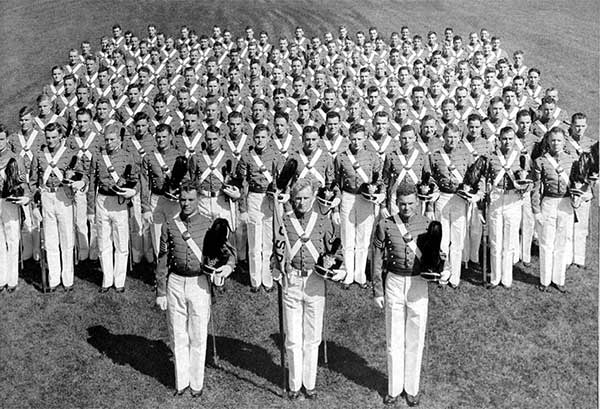
Most of the Class of 1942 entered the United States Military Academy on July 1st, 1938, during the Great Depression, and 374 graduated on May 29, 1942, as the first USMA class to graduate into World War II. Chief of Staff of the Army General George C. Marshall presented diplomas to 238 graduates commissioned into the Army and 136 who joined the Army Air Corps. The Cadet First Captain for the Class of 1942 was Carl C. Hinkle, and the first overall graduate was James H. Hottenroth. The last living member of the class was COL Peter T. Russell (USA, Retired), who was 102 years old when he passed away on August 12, 2022; COL Russell attended his 80th Reunion at West Point in May 2022 and participated in the Alumni Exercises at Thayer Statue.
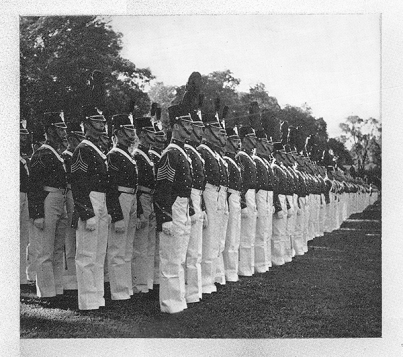
Notable graduates from the Class of 1942 include CPT Frederic H.S. Tate, who was killed after his fighter plane was shot down over France in WWII; Tate Rink in Holleder Center is named after him and his brother. 39 members of the class achieved general officer rank in the Army or Air Force (over 10% of the class), while 17 died during post-graduation deployment training and 52 died as a result of WWII, including the Class President and Vice President. About 20% of the class served combat duty in the Korean War, and two members earned the Distinguished Service Cross (DSC) in Vietnam. The Class of 1942 earned six DSCs, 64 Silver Stars, and 134 Purple Hearts during their time in uniform. They donated over $2.4 million to the Academy, including the Eisenhower Hall Terrace and the seats in Randall Hall. As cadets, the Class of 1942 had mandatory equestrian training starting their Third Class (yearling) year in Thayer Riding Hall. The Class was featured in a May 1966 Fortune Magazine article as the “backbone” of the Army Officer Corps.
From the Class of 1942 website: Those of us still alive all lost friends and roommates. We mourn their untimely deaths, but we also say to them, “Well done, be thou at peace.” To future readers of these pages, we can only say we tried to point the way by being at the front. In our course on Military History, we studied the progress of WWII in detail. We also heard with interest Colonel Beukema’s lectures on the Japanese menace in the Far East. Earlier, we had called him the “saber rattler,” but now we recognized the wisdom of his forecasts. All this came to a climax, of course, with the news on that fateful Sunday in December of the Pearl Harbor bombing. Now at war in earnest with the German-Italian-Japanese axis, we took up the battle cry for early graduation. But the only “early” we got was the reduction of June Week from a scheduled two weeks to two days.