
By Jane Anderson, WPAOG staff
Post-traumatic stress is often the cost of a soldier’s service. Combat, accidents, or service-related trauma leaves invisible wounds that are not easily identified, much less resolved. And, most times, sufferers don’t know how or who to ask for help. West Point graduates continue to lead—on screen and behind the scenes—by confronting those invisible wounds of war and strengthening the network of support for those who have served.
WPAOG Veterans Services, led by Susan Irons ’89, helps West Point graduates experiencing such trauma by helping them navigate benefits available to them through Veterans Affairs and other conduits. “Educate, connect, empower: Those are our keywords,” Irons says. Offering webinars to West Point classes and societies and speaking with members of WPAOG’s newly created Survivors Community Outreach, Irons raises awareness of how to access benefits, including advocacy, counseling, and financial assistance.
The mission to help veterans in need moved to the big screen last month with the premiere of Sheepdog, a movie supported by a couple of West Point graduates. The film centers on Calvin Cole, a combat veteran (portrayed by Steven Grayhm) whose untreated post-traumatic stress leads him into isolation, anger, and conflict with the law ahead of a hard-won journey toward post-traumatic growth.
Sheepdog brings to life the challenges faced by today’s veteran community as they learn to live with the lasting impacts and memories of combat. Producer Amy Mitchell had worked with West Point grad COL (R) Jason Garkey ’93 at the Pentagon and reached out for grassroots support for the film from veterans’ service organizations.
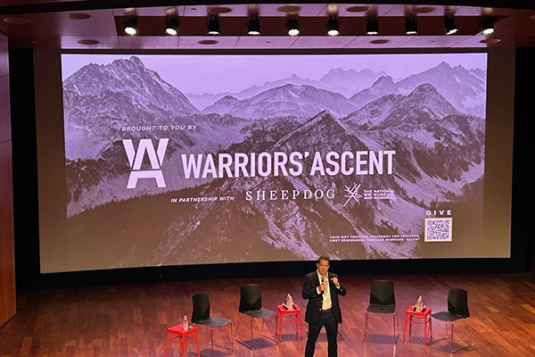
Garkey knew who he’d contact. “Knowing your organization’s mission, I thought you would be interested in this project,” he wrote via LinkedIn to classmate LTC (R) Mike Kenny ’93. Kenny serves as executive director of Warriors’ Ascent, a Kansas City–based nonprofit dedicated to ending veteran suicide through a five-day, trauma-informed, holistic program that equips veterans and first responders with practical tools for healing.
“This is a story the public needs to hear,” says Garkey. “For more than two decades, most Americans were shielded from the realities of war, while a small fraction of the population carried that burden alone. Unlike World War II, when millions served and returning home meant being surrounded by others who shared that experience, today’s combat veterans often come back to communities without that built-in support network. We owe them our understanding, our compassion, and our commitment to helping them find renewed purpose when they return home.”
Irons and WPAOG’s Veterans Services provide that support for its graduates. Sixty volunteer Veterans Services liaisons (VVSLs) are “deployed” globally, ready to answer questions from graduates about what they need to do to access veterans’ benefits that may be available to them.
“We listen, and we have trusted partners who can help connect a graduate to a critical resource,” Irons says. “We talk about the things that are uncomfortable, but important, to talk about.”
Irons says that graduates who find themselves suffering from post-traumatic stress are often at a loss about where to seek help. “We’re supposed to be the best of the best, with a great military career, and when we get out, have a wonderful civilian career,” she says. “It’s difficult to acknowledge when we need to get help.”
Irons compares post-traumatic stress to carrying a rucksack full of bricks. “I don’t really want to carry it, but I don’t want to open it and look at it either,” she says. Equating resolving that stress with emptying the sack one brick at a time, Irons continues, “If you do open that rucksack, yes, it’s painful, but you can take out one brick at a time…and it will be lighter and less scary as you go on.” WPAOG’s Veterans Services, Survivors Community Outreach, and VVSLs are all a part of that “gripping hands” ethos of support.
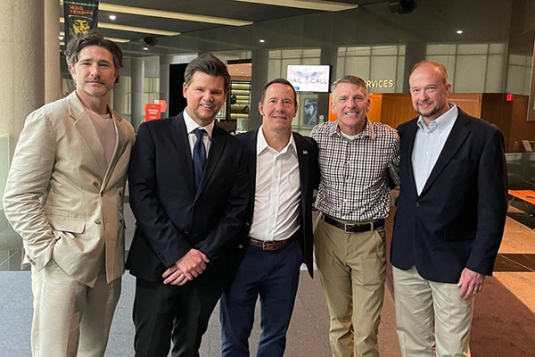
Resolving the pain of post-traumatic stress is a goal for Kenny, too. Spreading awareness about the help that’s available is key to reducing troubling statistics of veteran suicide, and Kenny was glad to support Sheepdog with Warriors Ascent. “My nonprofit hosted a screening of the film here in Kansas City at the National WWI Memorial and Museum during Memorial Day weekend,” he says. The film provides two great services to the veteran (and West Point) community, according to Kenny: it serves as a vehicle to tell the combat veteran’s story and plight in a gritty, realistic, and impactful manner. Thus, for veterans who struggle to convey what they’ve been through or are currently dealing with, the movie can effectively tell their story. “While it doesn’t candy-coat the challenges associated with post-traumatic stress, it does provide an uplifting message in that, if you are willing to do the work with the right tools and support, you can overcome PTS,” Kenny concludes. “But it only works if you do.”
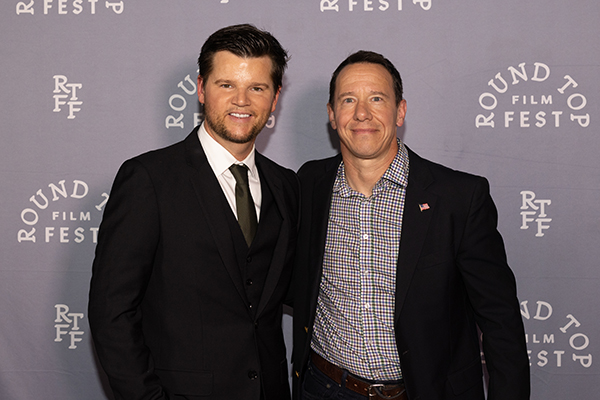
Photo 1: Actor Steven Grayhm and Mike Kenny ’93. Photo 2: Mike Kenny ’93 at screening for Sheepdog. Photo 3: (from left to right) Actor Matt Dallas, actor Steven Grayhm, Mike Kenny ’93, Tony Hofman ’89, and Brian Manus ’93