
Eighty Years Later, One of the ‘Brightest Dates in History’
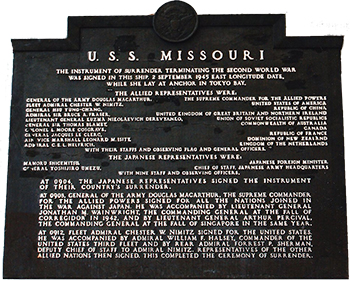
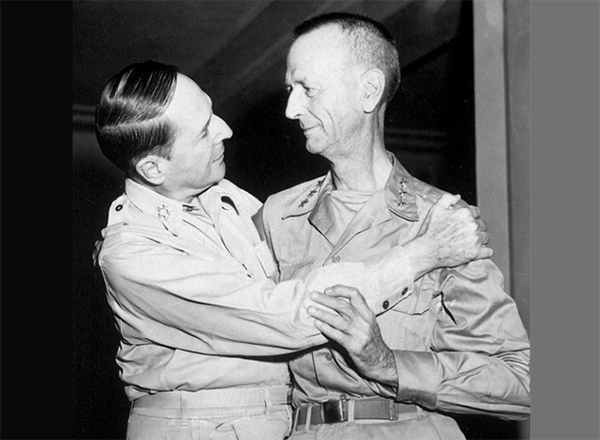
September 2nd marks the 80th anniversary of Japan’s surrender in World War II—a day etched in history. Later, Japanese diplomat Mr. Toshikazu Kase would say, “This Big Day on the Missouri will stand out as one of the brightest dates in history.” In 1945 aboard the USS Missouri in Tokyo Bay, two West Point graduates stood as enduring symbols of American perseverance, courage, and triumph: General of the Army Douglas MacArthur 1903, Supreme Commander Allied Powers, and Lieutenant General Jonathan M. Wainwright 1906, the highest-ranking American POW of the war. Both were awarded the Medal of Honor for their wartime service.
The connection between MacArthur and Wainwright ran deep. The Japanese attacked the Philippines December 8, 1941 (mere hours after Pearl Harbor) and began landings two days later. MacArthur and Wainwright led a desperate defense against overwhelming odds. By January 1942, Allied forces had retreated to Bataan and Corregidor. In March, under presidential orders, MacArthur evacuated, leaving Wainwright in command. Despite suffering from beriberi and walking with a cane, Wainwright held out until May, buying MacArthur time.
“As I look back on the long, tortuous trail from those grim days of Bataan and Corregidor… I thank a merciful God that he has given us the faith, the courage, and the power from which to mold victory,” MacArthur later reflected.
General MacArthur signed the surrender documents with several pens and presented one to “Skinny” Wainwright—a gesture rich with meaning. Wainwright had survived over three years of imprisonment and unimaginable suffering. He never considered himself a hero, never boasted of his suffering. His TAPS article says he “simply called it duty, performed with honor for his country.” Yet Wainwright’s Medal of Honor citation (displayed in Corregidor Sallyport) speaks volumes: “At the repeated risk of life… his presence provided the example and incentive that helped make the gallant efforts of these men possible.” His leadership on Corregidor, under relentless bombardment, combined with his inspiration and perseverance as a POW earned the reverence of history. For that reason, MacArthur wanted Wainwright as a witness to that big day in 1945.
Eight years later to the day, on September 2, 1953, General Wainwright passed away. West Point remembers him not only for his valor and sacrifice, but for the spirit he embodied. His TAPS article described him as representing “the Spirit of old West Point” and “personifying the heroism of one of the darkest but most glorious pages of American history.” After signing, MacArthur said, “We have known the bitterness of defeat and the exultation of triumph… Today the guns are silent… Today, freedom is on the offensive; democracy is on the march.”
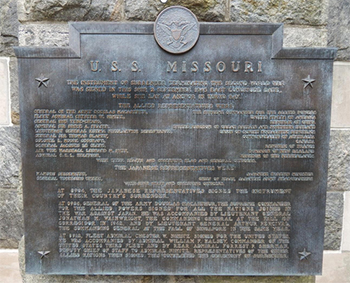
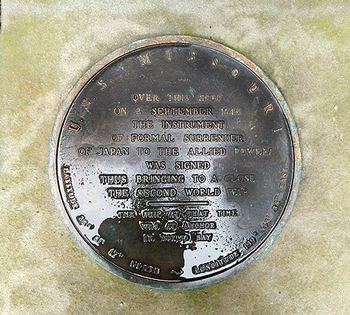
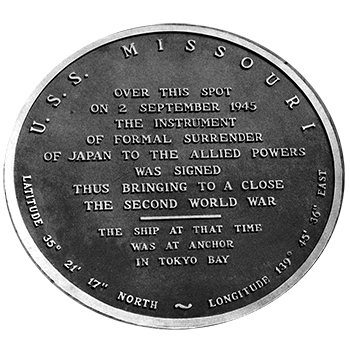
The memory of this bright day and the legacies of Generals MacArthur and Wainwright endure not only in history classes but in the very stones of the Academy. Embedded in the courtyard of West Point’s Taylor Hall building, the heart of USMA, West Point preserves a tangible memento of that bright day—a medallion from the deck of the Missouri. This piece of history is a quiet but powerful tribute to the Long Gray Line’s service to our nation.