Jane Anderson, WPAOG staff
All USMA graduates feel a sense of accomplishment upon completing their rigorous 47-month journey. Here are seven graduates from the “For Country We Commit” class who were nominated by their peers as accomplished standouts even before they tossed their white caps on May 23rd. The Long Gray Line is eager to see what the future holds for these second lieutenants (as well as all new officers) from the Class of 2026.
Brigid Duffy
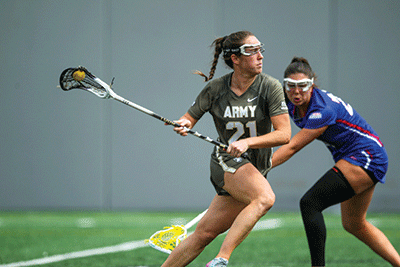
Competing in Division I lacrosse and soccer (a Patriot League Championship team in 2025) while balancing the Academy’s demands is among Duffy’s proudest achievements as a cadet, she says. In May, Duffy was named a finalist for the Tewaaraton Award, recognized as the preeminent annual award for college lacrosse. Duffy is the first-ever Army West Point Women’s Lacrosse Team finalist and the second-ever across both the men’s and women’s programs to achieve this honor.
“Being part of a Patriot League Championship team stands out, but what I value most are the relationships and shared commitment behind it,” Duffy says. Shaped by growing up in a large military family and playing sports her entire life, she notes that she’s always been competitive and drawn to challenges.
“I’ve been driven by the people around me—teammates, coaches, and mentors—who push me to be better while keeping me grounded and humble,” she says. Duffy commissioned Engineers and will hopefully attend Sapper and possibly Ranger School soon. She also says she’ll continue pursuing athletics at the highest level possible. “West Point has reinforced the discipline, resilience, and teamwork I will carry into the Army and beyond,” Duffy says.
Max Felter
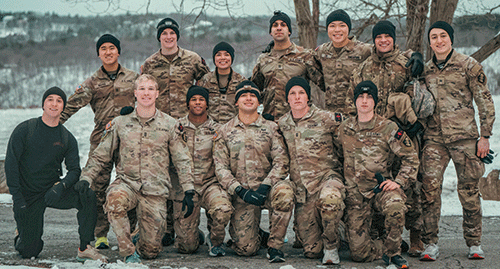
Felter prizes the bonds he created at the Academy: He points out that the friendships he formed are with people who will be “in my corner for life.” He considers it a privilege to have served as the A-3 company commander, received the Master of the Sword Award, and earned the opportunity to continue his studies at Oxford through the Rhodes Scholarship.
His accomplishments here were, in large part, a reflection of his family, friends, and mentors, who consistently refused to let him sell himself short.
“I hope to keep pushing myself to be of greatest service to the Army and to help it maintain its technological edge along the way,” Felter says. “Above all, West Point has taught me that your ability to foster relationships and work well among others are central to success.”
Elijah Gates
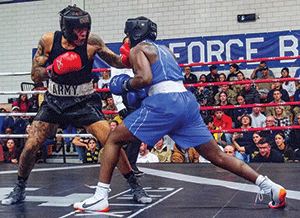
The apex of Gates’ 47 months was the time he spent leading the Boxing Team as its captain. “My motivation has always been investing in others—setting people up for success and creating an environment where they can grow, compete, and handle whatever life throws at them,” Gates explained, adding that his friends and teammates fueled that motivation. “West Point taught me that, at the end of the day, it’s about people,” Gates says. “Titles and achievements come and go, but relationships last.”
Commissioning as an Infantry officer after serving as an enlisted infantryman, Gates is joining the 101st Airborne Division and looking forward to being part of a high-performing team.
Jack Maraziti
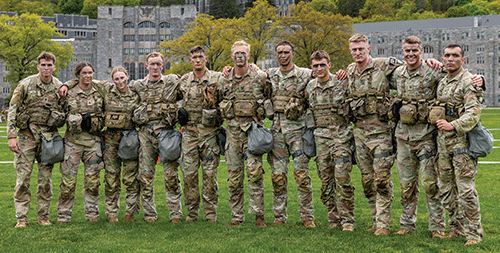
Two highlights of Maraziti’s West Point experience stand out for him: representing the United States internationally while competing on the Black and Gold Sandhurst Team and earning the Knight-Hennessy Scholarship from Stanford University, where he will study for a Master of Science degree in mechanical engineering. As an officer in the U.S. Army Corps of Engineers, Maraziti, the Class of 2026’s top cadet, expects his education and leadership will influence the robotics and autonomy realm of military technology and development.
Maraziti says his goals are being met through the support of his family, close friends, and mentors, adding that his West Point experience taught him the importance of hard work and being part of a team.
“There will always be challenges to face, but having the ability to persevere and learn from failure is what allows one to overcome those challenges,” he says. “To have an impact in the Army, I will look to be a leader that the team can rely on and trust.”
Johnathan Pinc
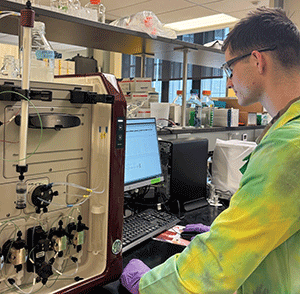
A Rhodes Scholar, Pinc says he’s been driven by a desire to use science to improve lives, and his success was enabled by the support of family, peers, and research advisors who encouraged his growth as a leader and researcher. As a Cyber officer, and in the career path that follows, Pinc aims to integrate science, technology, and leadership in addressing important global challenges.
“USMA has taught me that discipline, adaptability, and commitment to service are more important than any individual goal, and I will apply these lessons to lead with purpose and solve complex problems where they matter most,” he says.
Brandon Tran
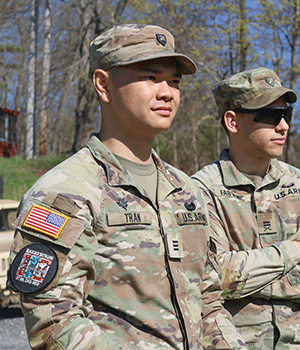
Among Tran’s proudest moments at the Academy are winning the Rhodes and Truman scholarships, organizing West Point’s first-ever Norwegian Sharpshooter Badge event, and having his work on Indo-Pacific security published, the latter of which earned him an invitation to the National Bureau of Asian Research and U.S. Indo-Pacific Command’s (INDOPACOM) annual conference on the People’s Liberation Army. Like his classmates, Tran is grateful for his family’s support and for his instructors, mentors, supervisors, and friends, who gave him the confidence to continue working on those issues.
Always drawn toward the military and studying security issues, Tran will serve as a Military Intelligence officer after completing his graduate studies at the University of Oxford. He has his sights set on potential roles at INDOPACOM and in Special Operations.
“Through my cross-cultural fluency and regional knowledge, in conjunction with practical experiences and training, I will be able to contribute to constructive relationships with partner forces and local populations as the U.S. Army continues to pursue peace throughout the world,” says Tran.
Matthew Wanta
Representing the Mathematical Sciences and Electrical Engineering and Computer Science departments in earning the Hertz Fellowship was a point of pride during Wanta’s time at USMA. Crediting the mentorship of Colonel James Bluman ’99, Dr. J. Josiah Steckenrider, and Dr. Joseph Dorta, Wanta says he is also grateful for “the support of my family and the grace of God.”
Wanta’s experience during his yearling year has impacted his future as well. “I was inspired at that time by a trip to the MIT Lincoln Laboratory SOCOM Ignite Program, which bridged the gap between classroom theory and operational application,” he says. He is circling back to Lincoln Labs, this time in graduate school to develop his analytical skills in support of the Army.
“I’ll be mentoring in the same program that inspired me,” Wanta notes. “West Point instilled in me the necessary critical thinking skills, the domain knowledge, and, most importantly, the confidence to tackle complex, real-world defense problems.”
“West Point instilled in me the necessary critical thinking skills, domain knowledge, and, most importantly, the confidence to tackle complex, real-world defense problems.” — 2LT Matthew Wanta ’26
Story from Summer West Point Magazine